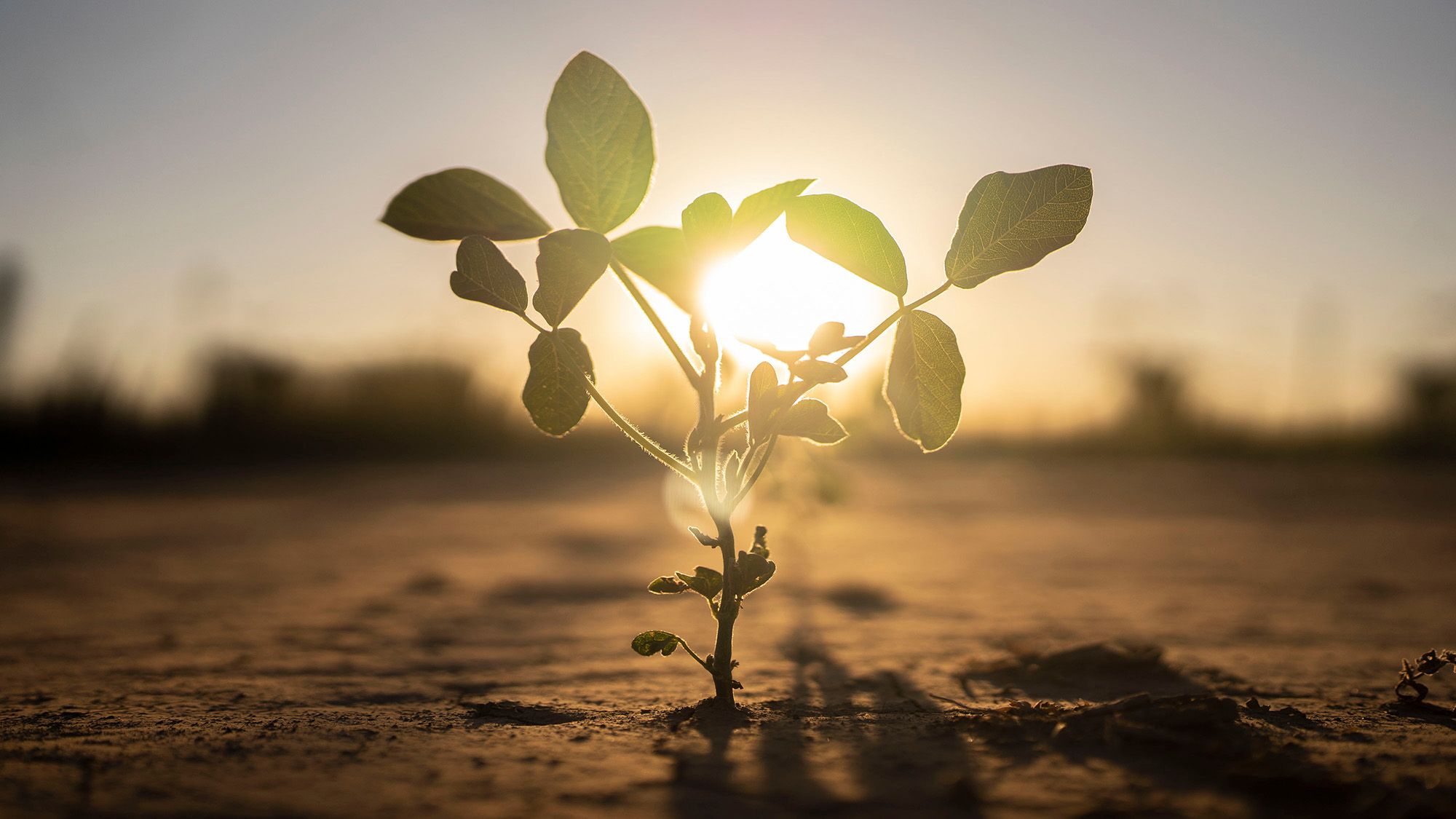
About 251 million years ago, a prolonged bout of volcanic activity in what is now Russia triggered the most devastating extinction event in Earth's history. According to Live Science, the Siberian Traps released enormous volumes of carbon dioxide over roughly a million years, pushing equatorial temperatures so high that much of the land became hostile to life and turning the oceans acidic and starved of oxygen. The event, known as the Permian-Triassic mass extinction or the "Great Dying," erased more than 90% of marine species and about 70% of land-dwelling species.
Yet in a region of present-day China, a pocket of pollen-producing plants survived the catastrophe and provided shelter for animals that outlasted the crisis, Live Science reports. Research cited by the outlet indicates this was not an isolated case, and that plants may have withstood the Great Dying better than many other forms of life.
Why it matters
As rising global temperatures destabilize ecosystems today, understanding how plants endured past climate shocks could inform expectations about which species are likely to persist. Live Science reports that many plant species carry adaptations suited to harsh conditions, and that experts say these traits, combined with a measure of chance, will determine whether species survive or vanish.
Chris Thomas, an ecologist and evolutionary biologist at the University of York in the U.K., told Live Science that plants often show considerable resilience precisely because they cannot relocate. Individual plants cannot move, and populations are poor at shifting location, he said, so many species have instead evolved ways to endure difficult conditions where they stand.
Regrowth, dormancy and hidden buds
Live Science reports that plants differ from most animals in their capacity to regenerate body parts, and that this regrowth can help them adjust to changing surroundings. Plants generally display greater developmental plasticity than animals, meaning they can alter how cells and tissues grow.
Amy Angert, a botanist at the University of British Columbia in Canada, told Live Science that many plants have what is called indeterminate growth and modular body plans. Unlike an animal that loses a limb permanently, a plant that loses a branch can produce new ones, and those new growths can respond to current environmental signals rather than being locked into developmental programs from the past, she said.
Live Science cites research finding that resprouts on holm oak trees (Quercus ilex) handle drought better than growth that had not resprouted. Because buds can remain dormant, many species can also regrow after catastrophic events such as fire. According to Live Science, most plant species in South Africa's Cape Floristic Region, the smallest of the world's six recognized floral kingdoms, depend on fire, resprouting afterward, and many of their seeds require fire to germinate.
Some species shield their buds with thick insulating bark, such as the snow gum (Eucalyptus pauciflora), while others, including stinging nettles (Urtica dioica), keep buds underground in a "bud bank," Live Science reports. Soil buffers those buds from extreme heat and cold, a widespread adaptation that lets herbaceous plants survive winter and allows bulb-forming plants to hide their tissues from fire.
Seeds as a genetic reserve
Live Science reports that nearly 350,000 plant species produce seeds, and that for most of them a seed holds a dormant miniature plant with the structures that will become leaves and roots. Daniel Anstett, an evolutionary ecologist at Cornell University, told Live Science that seeds can persist in the soil in a state of stasis, forming a seed bank from which plants may later return, drawing on what he described as a library of genetic information.
A 2021 paper in the journal Nature Communications, cited by Live Science, described seed banks as a key resilience tool, offering metabolically inactive individuals the chance to revive when conditions improve. The authors wrote that, with luck, at least some of those individuals will awaken in the future when the environment better supports growth and reproduction.
Seed banks also hold genetic diversity, which Angert told Live Science is the raw material for adaptation. Genetic variation is greater in large populations, she said, and can be shared between populations as conditions change, provided individuals can disperse successfully between them.
Live Science also reports on a paper published in the journal Science earlier this year in which researchers including Angert and Anstett showed that rapid evolution rescued populations of scarlet monkey flower (Erythranthe cardinalis) from a prolonged drought in the U.S. and Mexico between 2010 and 2018. Anstett told Live Science the plants can either grow quickly, flower and release seeds before the autumn drought arrives, or grow slowly and hunker down. The team sequenced the genomes of 55 populations to identify regions linked to stress and drought tolerance and tracked how the populations changed over the period, finding that some evolved rapidly in response.
What to watch: whether ongoing research into plant adaptations and genetic variation sharpens predictions about which species can outlast accelerating climate change.